
Heat exchange
Clean and evenly moistened surface allows to maintain efficiency without compensating for losses of fan and pump operation.
Ammonia Workshops 2024
The most important conclusions for those responsible for vapor condensers, water consumption and stable operation of ammonia installations.
What determines the outcome
The scraper does not work in isolation from the quality of water. The technical effect arises at the interface between heat exchange, water management and materials protection.
Clean and evenly moistened surface allows to maintain efficiency without compensating for losses of fan and pump operation.
The conductivity and the water balance show whether the installation works safely without unnecessary discharge.
At the same time, the programme should reduce sediment, corrosion and microbiological risk and its effectiveness must be verifiable.
Measurement in context
The laboratory result is combined with the collection point, temperature, blowdown, load and water consumption. It is only such a combination that leads to a credible correction of the programme.
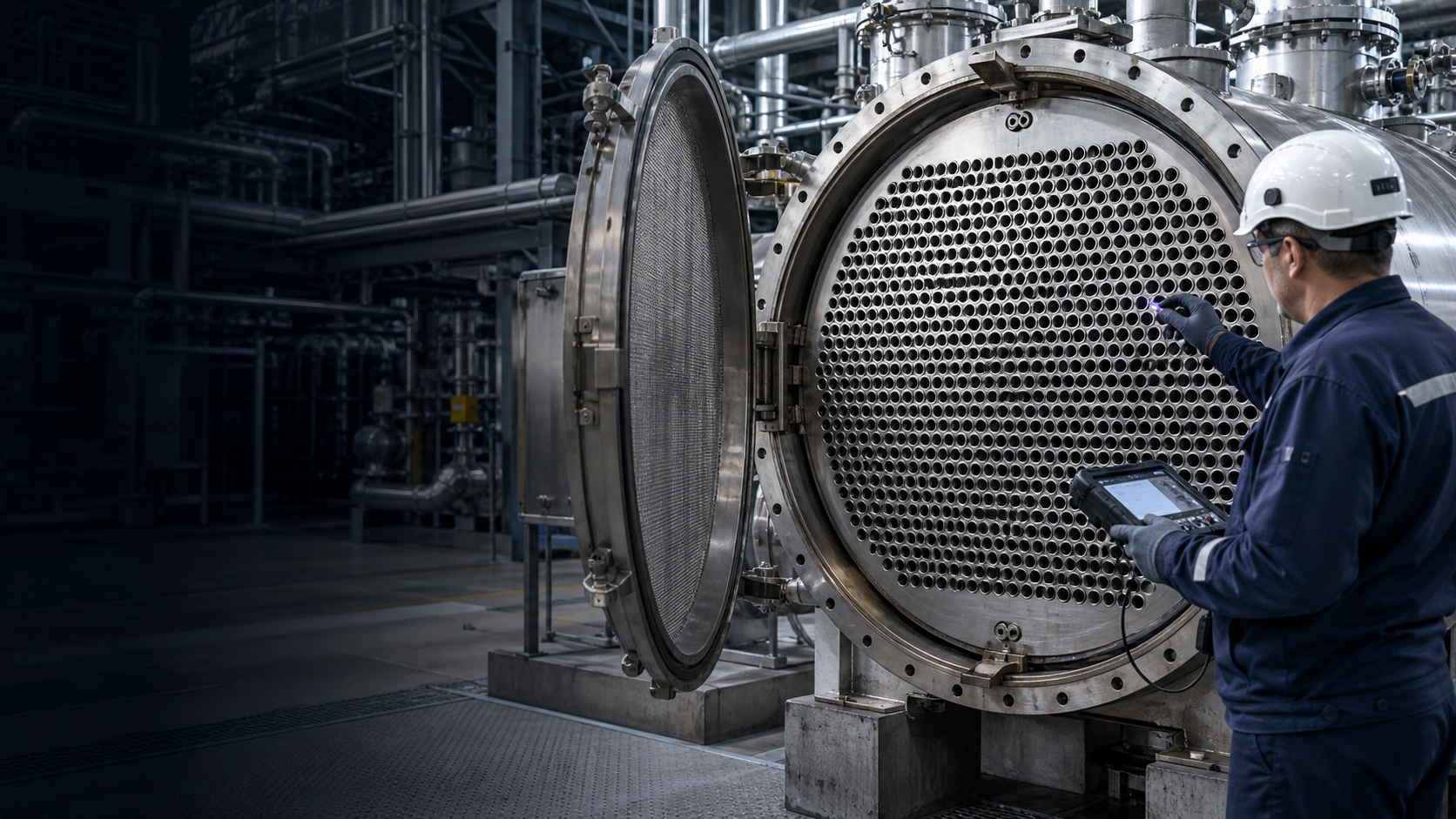
From measurement to decision
We're checking the sediment distribution, the roadway and places where the water doesn't work evenly.
The appearance of the surface is compared with the results of water and history of operation, instead of basing the decision on one parameter.
Only then do we determine whether the system requires adjusted settings, cleaning, service or a change to the protection programme.
Conclusions to apply
The workshops were a point of exchange of experience. In practice, the most important is to translate knowledge into a simple rhythm of control and action.
The constant setting does not respond to changes in temperature, water quality or in the operating intensity of the installation.
The result is to lead to a specific decision on blowdown, dosage, filtration or review of the device.
The trend of parameters, water consumption and maintenance observations allows you to assess whether the program really works.
Technical FAQ
Specific answers help prepare data and move faster from symptom to proper technical decision.
The sediment, biofilm and improper salinity limit water contact with the surface of heat exchange. The system can then consume more water and energy and the cooling parameters become less predictable.
The range depends on the installation, but usually includes conductivity, pH, hardness of make-up water, alkalinity and microbiological indicators. Equally important are blowdown, water consumption and system load conditions.
No. Excessive blowdown increases water consumption and sewage, and still does not solve problems with dosing, water distribution or biofilm. The settings shall result from measurements and balance of the whole system.
When the problem arises from obstructive nozzles, uneven spraying, surface damage, incorrect filtration or lack of control over the dosing point. A technical or maintenance correction is also needed.
From a short balance: additional water quality, current settings, water consumption, cleaning frequency and observed symptoms. On this basis, measurements can be indicated that will actually help to make a decision.
Your installation
A brief description of the installation and observed symptoms is sufficient to indicate the data needed for the first evaluation.